Blog, Cyprus, Investment in Cyprus, Property market

Paphos 2026 – why investors from Europe are increasingly choosing this destination over large metropolises

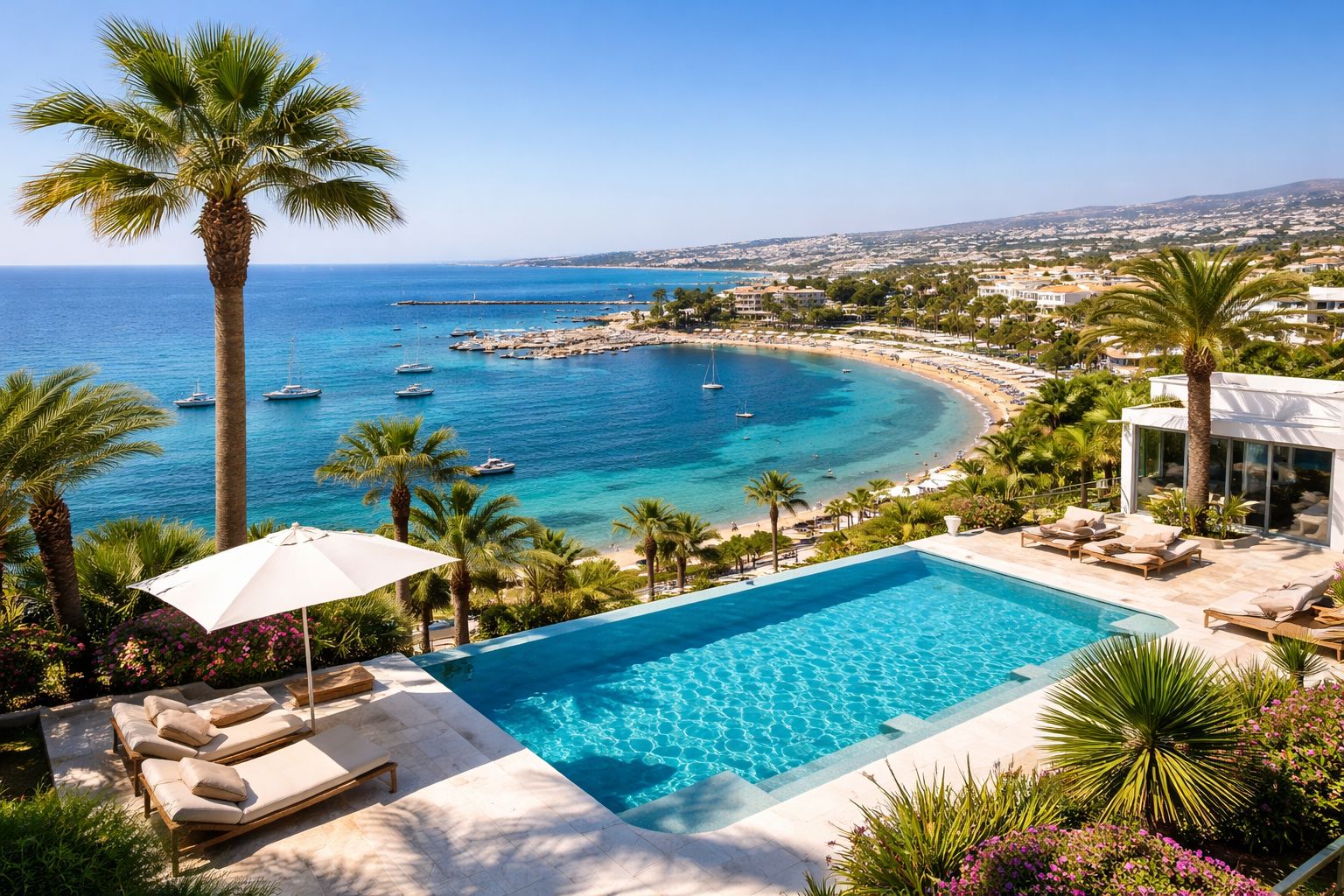
Pafos Cypr panorama wybrzeża nieruchomości inwestycyjne 2026

Why is Paphos becoming one of the most important real estate markets in Europe in 2026?

Just a few years ago, Paphos was primarily seen as a tranquil holiday destination. However, by 2026, it is increasingly appearing in investor analyses as a viable component of a European property portfolio. This shift is not accidental. It stems from a deeper transformation in how people think about real estate – not as a single purchase, but as a strategic tool for capital protection and geographical diversification within the European Union. In this context, Paphos is starting to play a whole new role.

Europe is changing the map of property investments

In 2026, the European property market is undergoing significant transformation.

Major metropolises such as London, Paris, or Amsterdam are entering a phase of high entry costs, increasing regulations, and ever more difficult investment financing. Capital is not disappearing from the property market; it's changing its geography. Instead of the largest hubs, investors are turning towards markets:

  • more regulatory flexibility
  • legally stable
  • offering real growth potential

In this context, Cyprus becomes a natural direction, and within its structure, Paphos gains particular significance.

Cypr inwesycje w Pafos

Paphos is no longer a „second home” market”

Not so long ago, properties in Paphos were mainly associated with the second home segment. Today, this market operates completely differently.

It combines three key elements:

  • stable foreign demand
  • strong lifestyle component
  • the growing short-term rental market

This makes Paphos cease to be a one-dimensional market. It doesn't rely solely on tourism, nor solely on local demand. It operates as a hybrid of several real estate market segments simultaneously.

More and more investors from Central Europe

The demand structure in Paphos is clearly changing. A growing group of buyers are investors from Central and Northern Europe, who view Cyprus as a way to diversify their investment portfolios, a method of securing capital within the European Union, and also as a lifestyle investment that can generate additional rental income. Concurrently, the segment of investors focused on short-term rentals is growing. In this case, the importance is no longer limited solely to the summer season. Extended stays outside the main season, a growing number of digital nomads, and the trend of "wintering" in warmer climates, which naturally extends periods of high property occupancy, are playing an increasingly significant role.

Dlaczego Pafos wyróżnia się na tle innych miast Cypru?

Against the backdrop of other regions in Cyprus, Paphos stands out primarily for its more balanced investment profile. In comparison, Limassol remains a business and premium market, characterised by a higher entry threshold and a strong presence of corporate capital. Larnaca, in turn, is in a phase of dynamic development, which means greater growth potential, but also greater volatility.

Paphos occupies an intermediate position between these markets, meaning it is increasingly seen as a more predictably investable location. It combines the accessibility of the premium segment, limited supply in prime locations, and stable foreign demand. This setup creates an environment conducive to making long-term investment decisions, based more on strategy than short-term speculation.

Short-term rentals stabilise investments

A key element of Paphos's appeal remains the developing short-term rental market. Unlike many European cities, Cyprus still offers relatively high regulatory flexibility in this area, allowing investors to freely build rental-based models.

As a result, a hybrid approach is increasingly observed, where a property serves simultaneously as a source of income and a private living space. In recent years, there has also been a visible extension of the tourist season, an increase in long-term rentals, and greater predictability of occupancy, which directly impacts revenue stability.

Property as a capital preservation strategy

One of the most significant changes in investor sentiment in 2026 is the way property is perceived. It is increasingly less likely to be seen solely as an asset focused on capital appreciation or a source of rental income. Instead, it is increasingly serving as a tool for wealth preservation, geographical diversification, and building resilience within an entire investment portfolio.

In this context, Paphos fits into one of the key trends in the European real estate market, where capital security and diversification are becoming as important as potential return on investment.

How will Paphos develop

In the coming years, Paphos will likely move towards a more selective premium market. The quality of the location, the standard of investment, and professional rental management will become increasingly important.

This will not be a mass market, but an increasingly investment-conscious one, where purchasing decisions will be made based on analysis, not impulse.

Why do investors look at Paphos differently than before

Paphos is ceasing to be viewed solely as a tourist destination. It is increasingly appearing in investor analyses as an element of a property portfolio strategy within the European Union. This is a change in perspective – from thinking about a single property to its role within the entire investment structure.

Author EM PRO Investments Ltd

We specialise in analysing the Cypriot property market and supporting foreign investors in building property portfolios in Southern Europe.

If you are considering moving to and living in Cyprus and prioritise a safe, compliant, and well-planned process, Contact the EM PRO Investments team.

We support individual clients/investors at every stage – from market analysis and strategy selection, through formalities, to investment execution and step-by-step relocation.